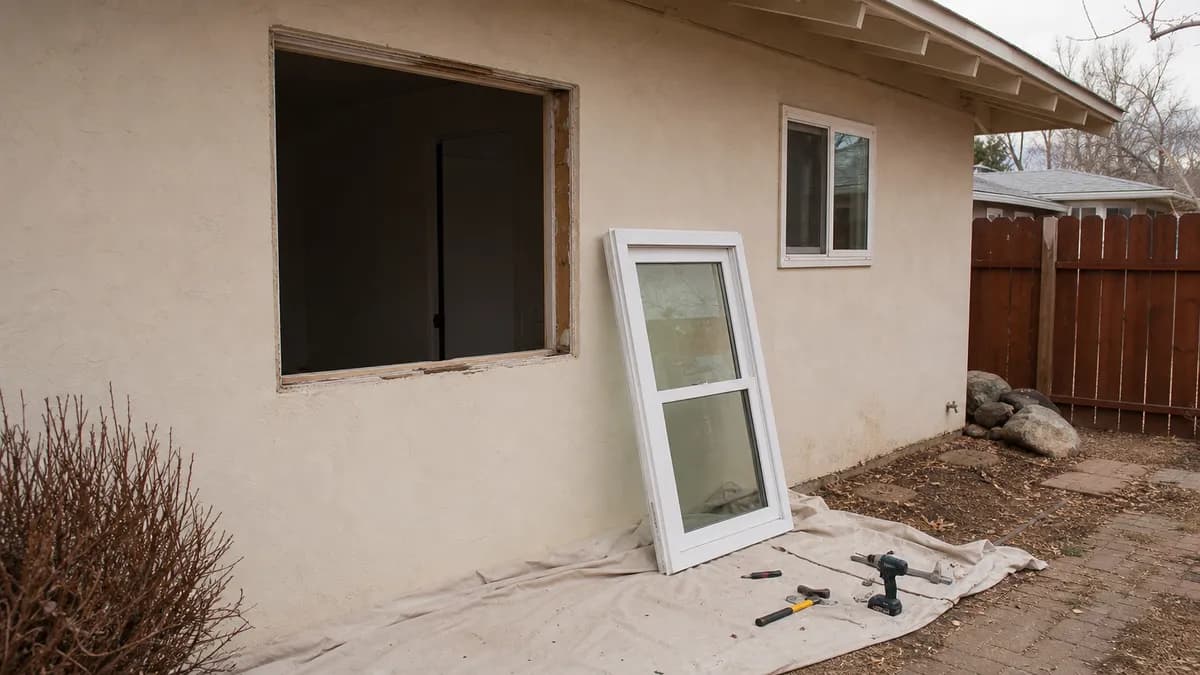
The three installation methods
| Method | What happens | Best for |
|---|---|---|
| Insert / retrofit / pocket | New window set inside the existing frame; trim and exterior finish stay | Sound frames, finish worth keeping, faster and less disruptive jobs |
| Full-frame replacement | Entire old window removed to the rough opening; new frame, flashing and trim | Rot, water damage, drafty or out-of-square openings, size or style changes |
| New-construction window | Has a nailing fin that attaches to the sheathing and integrates with flashing and stucco | New builds, additions and full-frame jobs where the wall is open |
The terms are used loosely, and installers use different words for the same thing. Ask the installer to say plainly whether the old frame stays or goes, whether the unit has a nailing fin, and how the opening will be flashed and sealed.
Insert (retrofit) windows
An insert window is built to fit inside the old frame. The installer removes the old sashes and stops, leaves the frame, then sets, shims, levels and seals the new unit with foam or sealant and caulk. Because the exterior finish and interior trim stay, an insert job is the lowest-impact option. The trade-off is a slightly smaller glass area, since the new frame sits inside the old one, and the old frame has to be in good condition. Hidden rot or water damage behind the frame stays hidden.
Full-frame replacement
A full-frame job removes everything down to the rough opening. The installer inspects for rot and damage, repairs framing, installs flashing, sets the new window and finishes interior trim and exterior finish. It restores full glass area, lets the installer fix water-management details, and allows size and style changes. It takes more labor and creates more patching, particularly with stucco.
New-construction windows
These have a nailing fin around the perimeter and are designed to go into an open wall during framing. In a replacement job they are used when the wall is already opened for a full-frame replacement, and the fin is integrated with the weather barrier and stucco lath. See the cost table below for how labor differs.
Costs: insert vs full-frame (national guides)
These are national guide ranges. Reno quotes vary with window type, size, material and the condition of the opening.
| Item | Insert / retrofit | Full-frame | Source |
|---|---|---|---|
| Window price | $100–$400 | $180–$1,500 | This Old House |
| Labor per window | $100–$300 | $150–$800 | HomeAdvisor |
| Hourly labor | $40–$65 | $40–$65 | HomeAdvisor |
| Labor, small to large units | $150–$300 small; up to $800 bay or bow | Same | Fixr |
Full-frame jobs cost more mostly in labor and finish repair, not the window itself. A typical replacement window installs at roughly $450–$1,200 each in Fixr's range. For whole-house totals, see window replacement cost in Reno.
Stucco considerations in Reno
Many Reno homes from the 1970s through the 2000s have stucco exteriors, including the stucco ranch shown above. Stucco shapes the retrofit-vs-full-frame decision because the window, flashing and stucco form one system.
- Insert windows leave the stucco alone. That avoids cutting, patching and color-matching, which is the main reason homeowners with intact stucco choose inserts.
- Full-frame jobs open the wall. The installer cuts back the stucco around the opening to reach the frame or fin, then patches. Matching texture and color on an older wall is difficult; ask to see how the installer handles it.
- Nailing-fin windows need stucco work. The fin sits under the lath and weather barrier. Retrofit-style flanges that attach over existing stucco are another approach; ask which one the quote uses.
- Water is the failure point. Reno gets only 7.35 inches of precipitation a year, but cracked stucco and failed caulk around openings still let water into walls. A rotted sill is a reason to go full-frame.
- Wind and sun. The Washoe Zephyr is a gusty summer afternoon wind, and sun at 4,505 ft degrades sealants, so exterior caulk lines should be checked at inspection.
How to choose for your house
Pick insert windows when
- The existing frames are square, solid and dry, with no soft wood or stains.
- You want to keep the stucco, trim and interior finish.
- The opening size and style stay the same.
- Budget and speed matter. Insert jobs usually cost less than full-frame, and the installer quotes the schedule.
Pick full-frame when
- You see rot, water stains, mold or soft sills, or an inspection suggests hidden damage.
- The old frames are single-pane aluminum or steel that cannot take an insert cleanly.
- You want a bigger opening, a different style or an egress window. See egress windows.
- You want the full glass area back, such as on a large picture window. See picture windows.
Mixed jobs are common
Many houses end up with a mix: inserts on the intact windows and full-frame on the bad ones. Ask the installer to quote each opening separately, with its method. For the frame material question, see vinyl windows and fiberglass windows.
Permits, codes and lead-safe rules
The City of Reno's EZ Permit sheet covers window replacement with a minimum U-factor of 0.30 and labels at inspection, so treat a Reno job as permit-required and have the installer confirm and pull it. Unincorporated Washoe County exempts same-opening, same-size replacement that meets code, but enlarging an opening is not covered by that exemption. Sparks and Carson City like-for-like rules are not confirmed here: ask the building department or the installer. Full detail is in window replacement process.
Pre-1978 homes: EPA's RRP rule covers window replacement regardless of size, and the contractor must be lead-safe certified. In Washoe County wildfire-urban-interface areas, exterior windows must use tempered glass, dual or triple glazed units, glass block or a 20-minute fire-resistive rating. Check an installer's license, including the C-8 glass and glazing classification (NAC 624.260), on the Nevada State Contractors Board site.
Main guide: window replacement in Reno, NV.