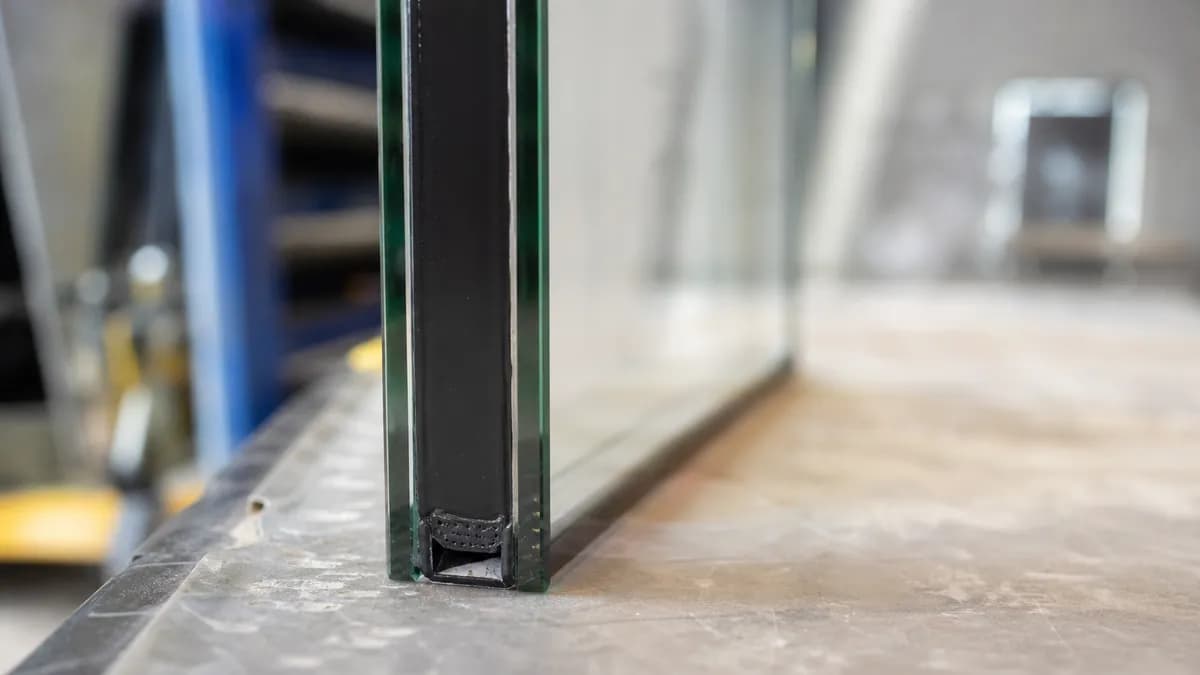
Foggy or failed-seal glass (insulated glass units)
A modern dual-pane window is built around an insulated glass unit, or IGU: two panes of glass separated by a spacer and sealed at the edge, with air or a gas such as argon in the gap. When the seal fails, moisture gets between the panes, and you see fog, droplets or mineral streaks you cannot wipe off. The cause is the seal, not dirt, and the glass cannot be cleaned from the inside.
A failed seal also means the gas fill has escaped and the unit insulates worse. For reference, the Efficient Windows Collaborative notes that an efficient window loses only about 0.5% of its gas fill per year, so a window with a healthy seal keeps about 90% of its original performance after 20 years. A fogged unit is not that case.
Reno's conditions are hard on edge seals. The sun at 4,505 ft is intense, July days reach about 94°F and nights fall to about 60°F, and winters bring about 122 days at or below freezing. Repeated expansion and contraction stresses the spacer and sealant, especially on west- and south-facing windows.
Replacing just the sealed unit
If the frame and sash are sound, the installer can replace only the IGU. The new unit is made to the measured size, set in the existing sash and sealed with glazing stops or tape. You keep the frame, trim, stucco finish and interior casing, and you can upgrade the glass package at the same time, such as adding Low-E coating (national guides list Low-E glass at about $300–$1,100 per window, Fixr). Lead times for made-to-size units depend on the supplier: ask the installer for a schedule.
When the window is the problem, not the glass
If the frame is warped, the sash is cracked, the hardware is obsolete or several windows are fogging at once, a full replacement is often the better value. See window repair for the repair-vs-replace comparison and double vs triple pane windows for glass options.
Glass-only vs full window replacement
| Factor | Glass-only (IGU swap) | Full window replacement |
|---|---|---|
| Best when | Frame, sash and hardware are in good shape | Frame is warped, rotted, leaky or hard to operate |
| What you keep | Frame, trim, stucco, interior casing | Nothing; new unit goes into the opening (insert) or full frame |
| Efficiency gain | New glass package only | New glass, frame, seals and hardware |
| Permit | Usually none; confirm with the installer | Treat as permit-required in the City of Reno |
| National cost | Glass $300–$880, double-pane $150–$600 (Fixr) | $450–$1,200 typical per window (Fixr) |
| Disruption | Light; mostly outside or sash removal | Higher; trim and finish repair possible |
These figures are national guide ranges, not Reno quotes. Fixr lists labor for glass work at about $50–$125 on top of the glass. For the full-window route, see window replacement cost in Reno and retrofit vs full-frame windows.
Broken and cracked glass
A cracked or shattered pane needs prompt temporary cover, then a replacement made to the measured size. Afternoon Washoe Zephyr gusts push loose glass and debris, so board or tape the opening for the night if the installer cannot come the same day. Thermal cracks, a single curved crack starting at the edge, often come from uneven heating, such as a dark curtain or a shade against sun-heated glass in a cold morning.
- Single pane: the replacement is quick and inexpensive, but the window stays inefficient. Consider moving up to a dual-pane glass unit if the frame allows it.
- Dual pane: one cracked pane means the whole IGU is replaced, because the seal is broken.
- Laminated or tempered glass: these types are ordered to specification and cannot be cut to size on site.
Tempered glass requirements
Some replacement glass must be safety glazing, meaning tempered or laminated, under the International Residential Code hazardous-location rules. The City of Reno's EZ Permit sheet for window replacement lists safety glazing and the same hazardous locations. Section numbering varies by code edition, so the installer should confirm the current section with the building department.
| Location | Safety glazing needed when |
|---|---|
| Swinging, sliding and bifold doors | Always, except openings a 3-inch sphere cannot pass |
| Beside a door | Glass within 24 inches of either side of the door, with its bottom edge under 60 inches above the floor |
| Large low windows | Pane over 9 sq ft, bottom edge under 18 inches, top edge over 36 inches, and a walking surface within 36 inches |
| Near a tub or shower | Glazing within 60 inches of the tub or shower edge (per Reno's sheet) |
| Near stairs and landings | Per Reno's sheet; the installer confirms the exact rule |
Wildfire rules add a second layer. Washoe County's 2024 WUI guide requires exterior windows, glazed doors and skylights to use tempered glass, insulating (dual or tripled glazed) glass units, glass block or a 20-minute fire-resistive rating. A replacement unit has to keep the opening at the property's ignition-resistance level, and the fire district sets that level. See window replacement process for details. Egress windows have their own opening and glass rules; see egress windows.
Licensing, permits and lead-safe rules
Nevada's C-8 classification (glass and glazing, NAC 624.260) lets a licensee install, repair and replace glass and glass products, frames and hardware. Check the installer's license number and classification on the Nevada State Contractors Board site before you sign. Under NRS 624.720, licensed contractors must show their license number in advertising. Reno Vista Windows is a referral service, not a contractor.
A glass-only swap inside the existing sash often falls outside permit rules, but a full unit replacement in the City of Reno goes through EZ Permit with a U-0.30 minimum and labels at inspection. Unincorporated Washoe County exempts same-opening, same-size replacement that meets code. Sparks and Carson City rules are not confirmed here, so ask the building department or the installer. In homes built before 1978, EPA's RRP rule covers paid work that disturbs painted surfaces, and window replacement is always covered.
What to ask a glass installer
- Is the quote for the IGU only, or the full window, and does it include removal and disposal of the old glass?
- What glass package is in the new unit (Low-E coating, gas fill, spacer), and what are its NFRC U-factor and SHGC?
- Does the location need tempered or laminated glass, and is it marked as such?
- Who confirms any permit, and does the quote say so?
- What written coverage does the installer give on the new unit and the labor?
To request a match, tell us the window type, whether the glass is fogged or broken, and the approximate size. We connect you with a licensed local installer who measures and quotes. Related reading: energy-efficient windows.
Main guide: window replacement in Reno, NV.